How 1818 Capital to Unlock Nigeria’s Stranded Real Estate Value
By Matthew Ebhodaghe
Founder, 1818 Capital Ltd
Nigeria’s real estate sector is rich in land but poor in livability. Across our cities, millions of plots sit undeveloped or under-utilized—not because their owners lack ambition, but because our development model is broken.
Fragmented land sales, uncoordinated layouts, and absent infrastructure have left vast tracts stranded. Roads stop short of estates. Power flickers, if it arrives at all. Clean water and reliable drainage are rare. Security is ad-hoc. Social amenities—parks, clinics, broadband—are an afterthought.
The result is that much of our “real estate” is, in truth, dead capital. It looks valuable on paper but produces no cash flow, no utility, and no liquidity. Without access roads, stable electricity, clean water, waste management, or coordinated security, a plot is a liability—its owner pays to guard it, but can neither lease it for income nor sell it at a premium.
The economic cost of dead capital
Nigeria’s mortgage market is still less than 1% of GDP. That means land and buildings aren’t easily turned into cash or credit. Owners can’t leverage them for business, education, or expansion. Even the country’s most vibrant urban areas are riddled with half-developed communities where infrastructure is missing or crumbling.
When property markets lack shared services, individual owners can’t finance or maintain them alone. One plot can’t build a road; one household can’t run a 24-hour security patrol. The absence of collective infrastructure keeps everyone’s value depressed.
1818 Capital’s co-development and co-ownership model
At 1818 Capital, we believe the answer is to pool—not just land, but effort and investment. We bring landowners, communities, cooperatives, and investors into joint ventures where contributions are aligned:
- Landowners contribute land in exchange for equity, not a one-time sale.
- 1818 Capital brings planning, engineering, and project delivery.
- Cooperatives/DAOs and investors contribute funding.
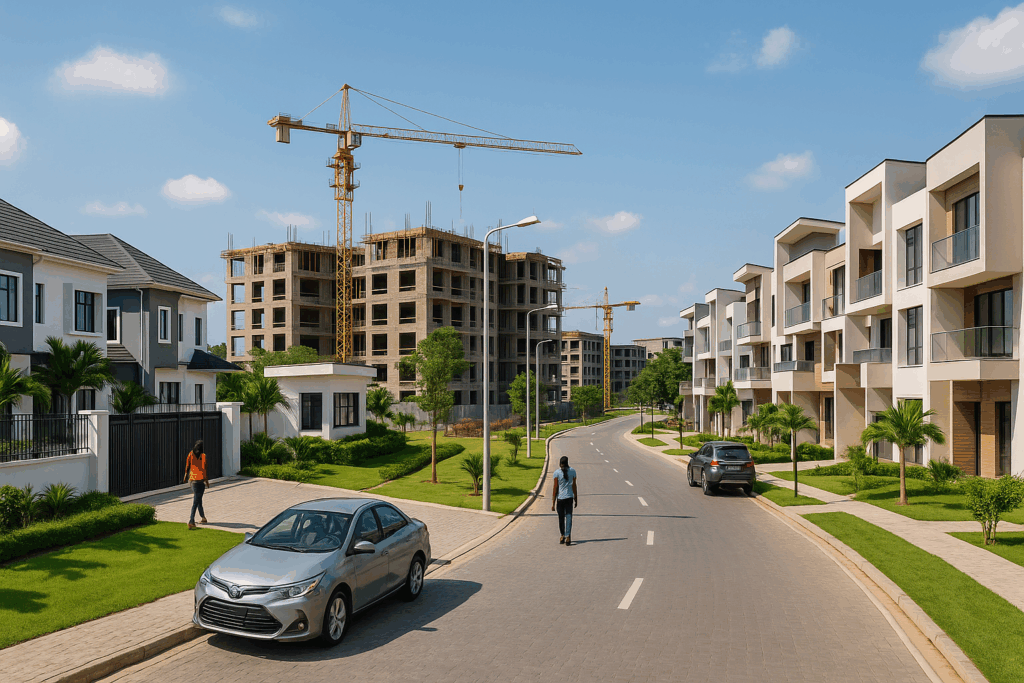
Instead of scattered plots, we create connected districts with coordinated roads, utilities, and shared amenities. Returns—whether from sales, rentals, or service revenues—are shared among all co-owners.
Building livability into the business model
The distinguishing feature of our model is that we deliver core utilities and community services from day one—before the paint dries on the first houses. This ensures new districts are immediately functional and desirable.
We focus on:
- Access roads with drainage for all-weather connectivity
- 24/7 hybrid security patrols with CCTV and access control
- Stable power via solar-hybrid mini-grids and battery storage
- Water and wastewater systems with boreholes, treatment, and distribution
- Waste management and environmental upkeep
- Broadband conduits for digital connectivity
- Community spaces—parks, recreation, and first-response facilities
These aren’t “nice-to-haves.” They are the difference between a plot that sits idle and one that generates steady income.
Rollout: preparing for commercial service
We are currently finalizing the technical, operational, and financing frameworks for these services. Our teams are mapping supply routes, negotiating service contracts, and stress-testing delivery models to ensure that once launched, they operate at scale and with reliability.
In the coming weeks, we will complete preparations so that shortly after, 1818 Capital can roll out:
- Hybrid security patrols to safeguard estates and construction sites
- Solar-hybrid mini-grid solutions for reliable, clean power
- Borehole and reticulation systems for potable water supply
- Organized waste management to keep communities clean
- Drainage and road access programs for immediate mobility and flood protection
These will be commercially available to real estate developments, community cooperatives, and private estates ready to unlock their land’s true value.
From plots to places
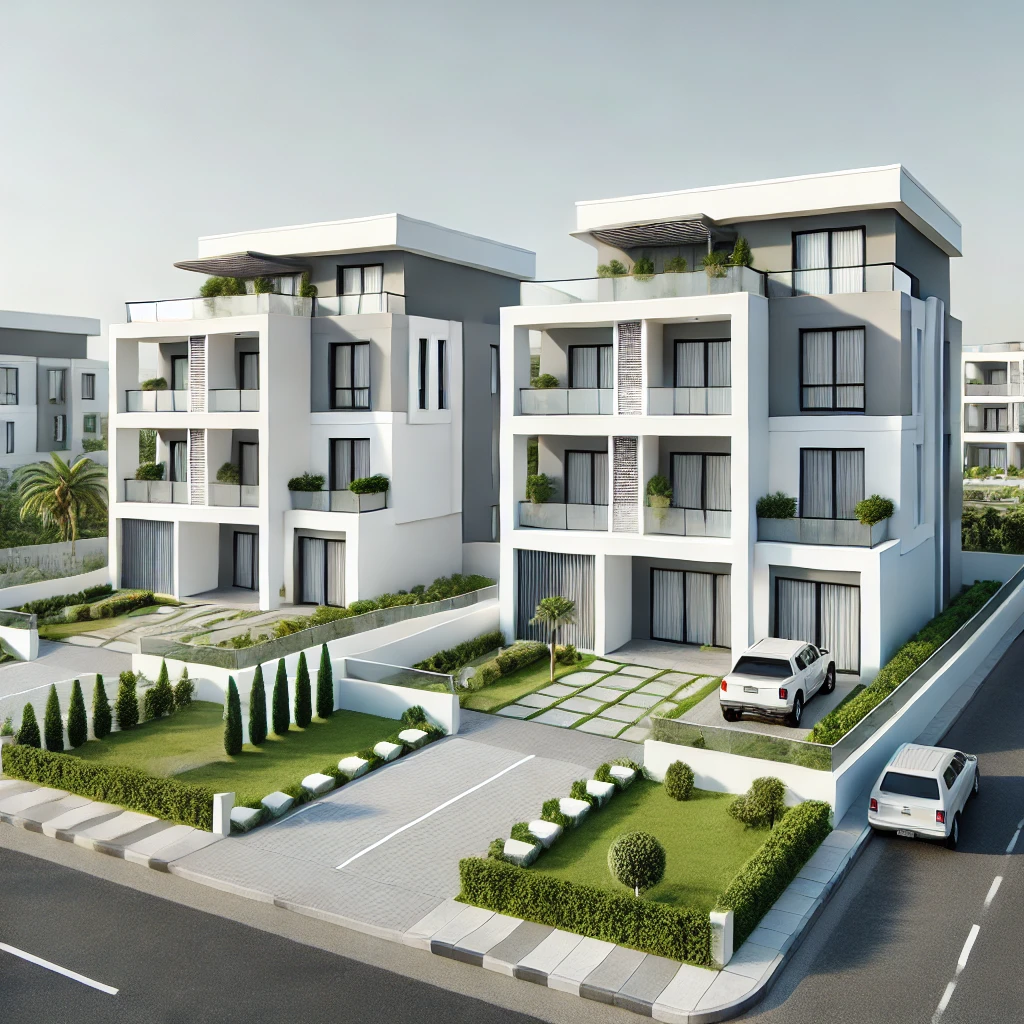
Our vision is simple: take Nigeria’s fragmented, under-performing land assets and turn them into thriving, revenue-generating communities. When infrastructure comes first, everything else follows—occupancy rises, businesses open, lenders take interest, and values appreciate.
1818 Capital’s co-development and co-ownership approach bridges the gap between aspiration and reality. It’s a model built not on speculation, but on shared investment, shared risk, and shared reward.
Nigeria’s landowners deserve more than dead capital. They deserve neighborhoods that work, grow, and enrich everyone who calls them home.